





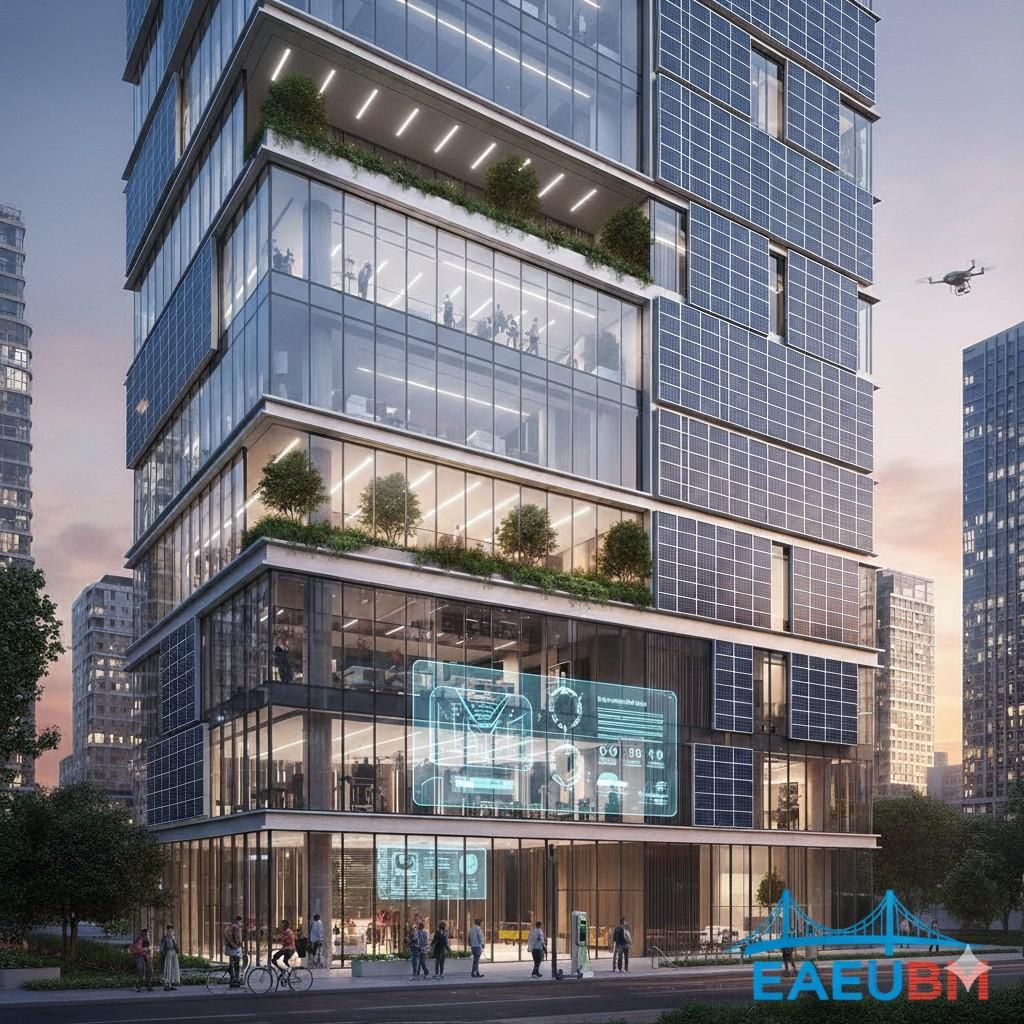
Smart Buildings and Their Importance in Construction
Smart buildings are modern structures that employ advanced technologies and integrated systems to automatically and intelligently manage various functions such as lighting, heating and cooling, security, and energy consumption. The primary goal of these buildings is to enhance comfort, safety, and energy efficiency.
Definition of a Smart Building
A smart building (Smart Building) is a combination of technologies and equipment that, through the Internet of Things (IoT), sensors, controllers, and management software, enables monitoring and precise control of building operations.
Key Components of Smart Buildings
- Sensors and actuators: measure temperature, humidity, light, motion, and other environmental conditions.
- Centralized control systems: manage electrical and mechanical equipment such as elevators, ventilation, and lighting.
- Communication networks: utilize protocols like Wi-Fi, ZigBee, or Z-Wave to connect devices.
- Management software: allows remote control via smartphones or computers.
Advantages of Smart Buildings
- Energy savings: automatic adjustment of lighting and HVAC systems based on occupancy.
- Enhanced security: smart cameras, alarm systems, and digital locks.
- Comfort and convenience: remote control of devices and personalized scenarios (e.g., lights turning on upon entry).
- Cost reduction: optimized energy use and efficient equipment maintenance.
- Environmental benefits: reduced resource consumption and lower carbon emissions.
Challenges and Limitations
- High initial installation costs
- Requirement for stable communication infrastructure
- Cybersecurity risks and privacy concerns
Conclusion
Smart buildings represent the future of architecture and urban development. By combining technology and design, they provide residents with a more comfortable, secure, and sustainable lifestyle.