





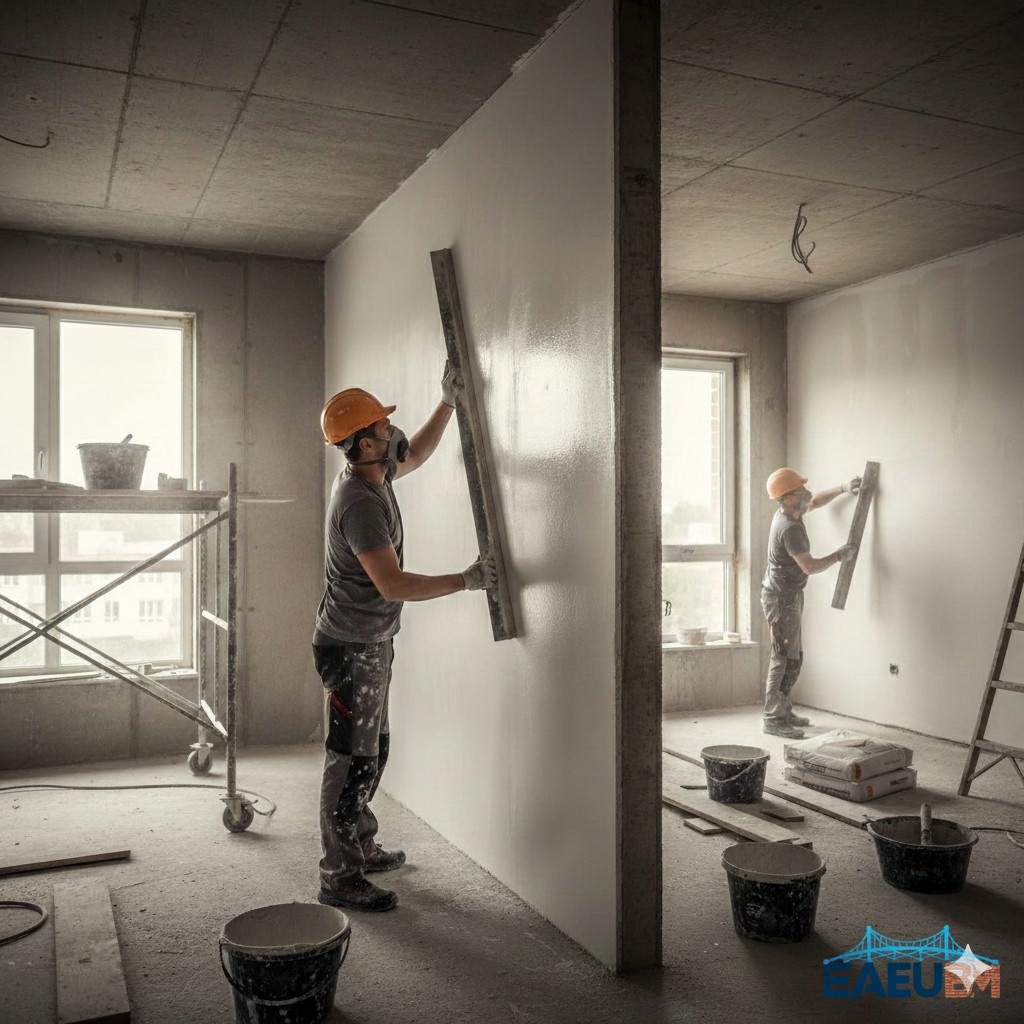
Plastering and Its Importance in Construction
Plastering is one of the oldest and most widely used finishing techniques in construction. From ancient times to the present day, gypsum has served as a lightweight, accessible, and cost-effective material, playing a vital role in both the aesthetic enhancement and structural reinforcement of buildings. Derived from gypsum stone, this mineral possesses unique properties that secure its place in both traditional and modern architecture.
Introduction
Plastering is one of the oldest and most widely used finishing techniques in construction. From ancient times to the present day, gypsum has served as a lightweight, accessible, and cost-effective material, playing a vital role in both the aesthetic enhancement and structural reinforcement of buildings. Derived from gypsum stone, this mineral possesses unique properties that secure its place in both traditional and modern architecture.
The Importance of Plastering in Construction
- Aesthetic appeal and uniformity: plastering ensures smooth surfaces ready for painting or wallpapering.
- Concealment of installations: electrical wiring and piping are covered with plaster, resulting in a neat appearance.
- Acoustic and Thermal Insulation: Plaster has relative insulating properties and helps reduce the transmission of sound and heat.
- Durability and Quality of the Structure: Proper plastering increases the surface’s resistance to impact and erosion.
- Execution Speed: Due to its suitable setting time, plaster allows for quick and efficient application.
Technical Properties of Plaster
- High Adhesion: Plaster adheres well to various surfaces and creates a firm coating.
- Formability/Mouldability: The ability to execute artistic and decorative designs, such as traditional plaster mouldings (stucco/ornate plasterwork).
- Suitable Setting Time: Sufficient time for precise application and corrections during the work.
- Accessibility: Due to the existence of numerous gypsum rock mines, this material is readily available.
Applications of Plastering
- Whitewashing and fine finishing of walls and ceilings
- Installation of false ceilings and interior decoration
- Artistic plasterwork in traditional and religious structures
- Protective coating to extend the lifespan of buildings
Conclusion
Plastering is far more than a simple construction activity; it is a critical stage in building development that directly influences the beauty, quality, durability, and comfort of a structure. Selecting the right type of gypsum and ensuring professional application can significantly enhance both the value and functionality of any building.