





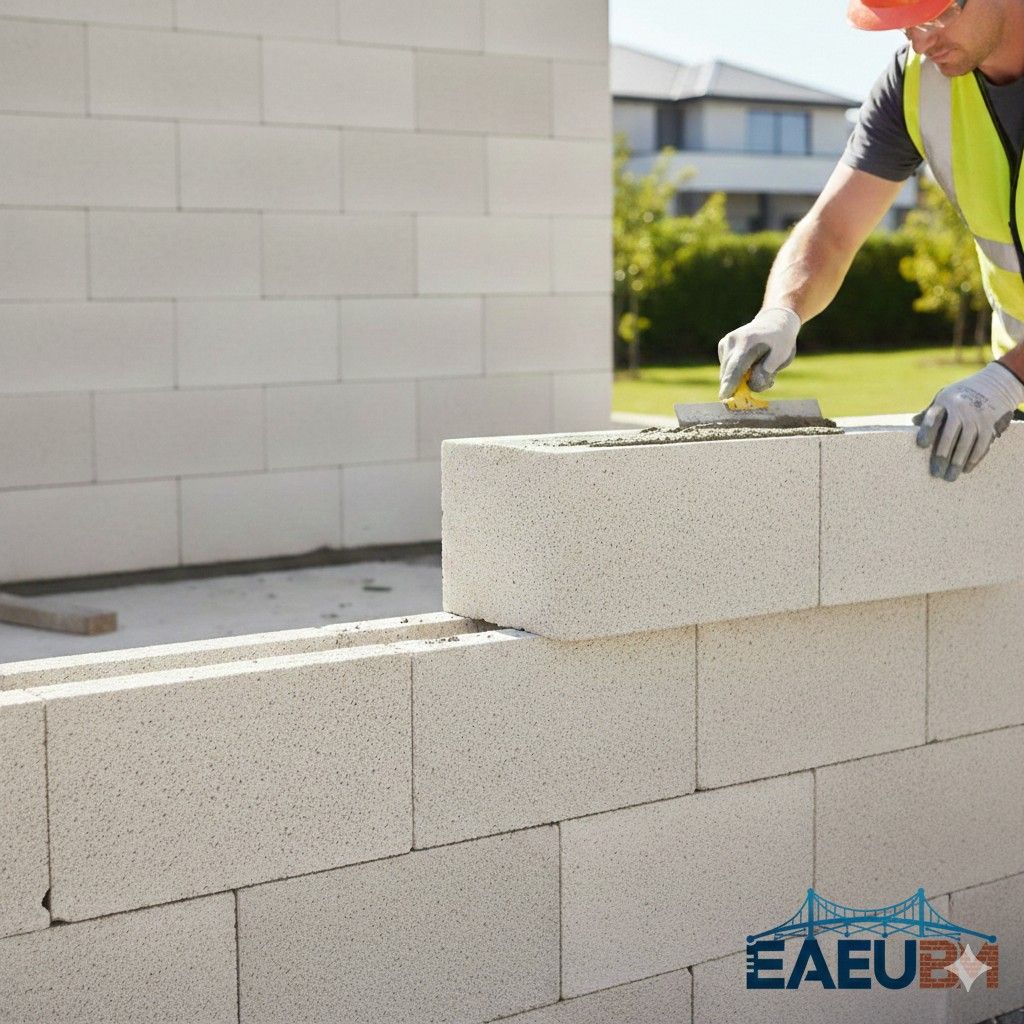
What is Hebel? Autoclaved Aerated Concrete (AAC)
Hebel is the trade name for a type of lightweight porous concrete known in the construction industry by its scientific name, Autoclaved Aerated Concrete (AAC). Due to its unique properties, these blocks are used as a modern and efficient substitute for traditional materials like brick and concrete blocks in the construction of non-load-bearing walls.
Components and Manufacturing Process
Hebel blocks are manufactured from a common combination of raw materials, which include:
- Silica Sand (or finely ground quartz sand)
- Cement
- Lime
- Aluminum Powder (serving as an aerating agent)
- Water
Manufacturing Process: During production, after mixing the components and pouring them into molds, the aluminum powder reacts with the alkaline materials, causing the creation of tiny air bubbles within the mixture. These bubbles significantly expand the material’s volume, forming a highly porous and lightweight structure. Finally, these blocks are cured in a device called an Autoclave under high pressure and temperature to achieve their final strength and durability.
Key Features and Advantages of Heblex (AAC)
The use of Hebel blocks offers numerous benefits in construction projects:
- . Low Weight and Reduced Dead Load on the Structure
- The porous structure of Hebel results in a weight significantly lower than brick and concrete blocks (approximately one-third).
- This lightness reduces the structure’s dead load, consequently decreasing the need for larger dimensions in the frame and foundation, which is of paramount importance in earthquake-prone areas.
- Excellent Thermal Insulation
- The trapped air bubbles within the Hebel structure create exceptionally high thermal resistance.
- This feature leads to substantial energy savings for the building’s heating and cooling, making the structure compliant with energy conservation regulations.
- Adequate Sound Insulation
- The porous structure helps absorb sound, acting as an effective acoustic barrier that provides greater peace and quiet for occupants.
- . Fire Resistance
- Hebel is a non-combustible material and can withstand direct fire for an extended period (up to 4 hours), significantly enhancing building safety.
- High Speed of Execution
- The larger dimensions of Hebel blocks compared to bricks, combined with their ease of cutting and installation, drastically increase the speed of wall construction and reduce labor costs.
- Easy Workability
- These blocks are easily cut with a special saw, and the necessary grooves and chases for pipes and utilities can be created without excessive damage.
Applications
Hebel blocks are primarily used in construction for the following purposes:
- Perimeter (External) Walls: Due to their excellent thermal insulation properties.
- Internal Partitions: Due to their lightweight and sound insulation qualities.
- Construction of non-load-bearing partition walls.
Important Note: Hebel blocks are generally classified as Non-Load Bearing materials and are not suitable for supporting the main structural loads of the building (such as the roof and upper floors).
Considerations and Disadvantages
Despite its many advantages, Hebel has a few limitations that must be addressed:
- Moisture Absorption: In its raw state, Hebel can absorb ambient moisture. Therefore, proper waterproofing coatings and sealants are essential in very humid regions or on external walls.
- Limited Compressive Strength: Hebel’s compressive strength is lower than that of conventional concrete and some traditional materials, which is why it is not used in load-bearing walls.
- Need for Special Mortar and Tools: These blocks must be installed using special thin-bed adhesive (Hebel adhesive) and not traditional cement mortar. They also require specific cutting tools.
- Vulnerability to Impact: During handling and installation, they can be slightly more brittle than brick and sensitive to concentrated impacts.
Conclusion : Hebel (AAC) blocks, as a modern technology in the construction industry, offer advantages such as lightweight construction, excellent thermal and acoustic insulation, and fire resistance, making them an economical and efficient material for constructing walls. By adhering to technical installation standards and using appropriate finishes, these blocks can play a crucial role in lightening structures and optimizing the energy consumption of buildings.