





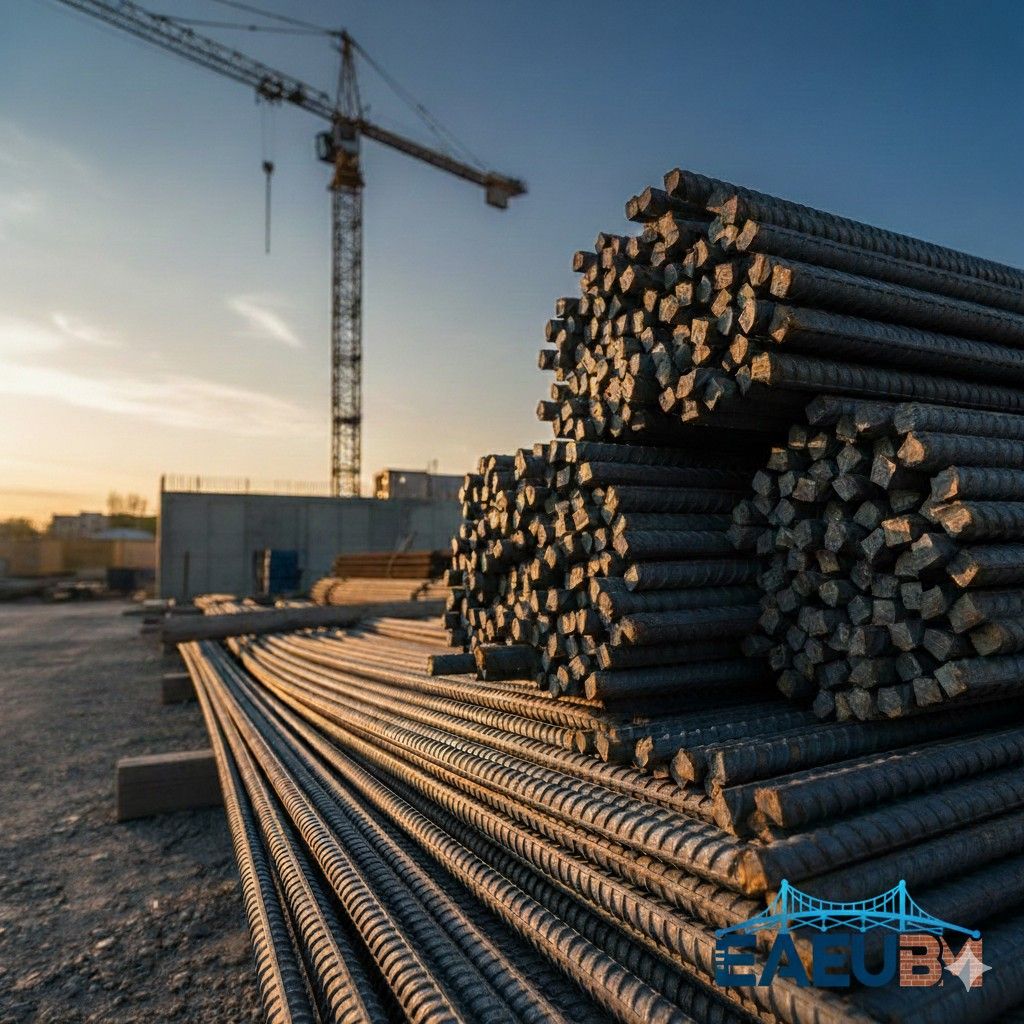
Rebar (Reinforcing Bar): Types, Specifications, and Its Crucial Role in Construction
Rebar (short for Reinforcing Bar, also referred to as Armature in Persian) is one of the most fundamental and widely used materials in the construction industry, particularly in reinforced concrete structures. The primary role of rebar is to enhance the tensile strength of concrete.
What is Rebar and Why is it Used?
- The Main Role: Concrete, by its nature, possesses very high compressive strength. However, its tensile strength is weak. Consequently, concrete structures subjected to tensile and bending forces (such as those caused by earthquakes, wind, or the structure’s own weight) can easily crack and fail.
- Rebar’s Function: Rebar, which is a steel bar, is placed inside the concrete to bear the tensile and shear forces. This significantly increases the integrity and strength of the entire structure. This composite material (concrete and rebar) is known as Reinforced Concrete.
Types of Re-bar
Rebars are classified based on their surface shape (appearance) and mechanical properties. The most common types in the Iranian market (based on the ISIRI 3132 national standard, derived from Russian standards) are:
Plain Rebar (A1 / S240)
- Appearance: The surface is completely smooth and free of ribs.
- Properties: It has high flexibility and excellent weldability.
- Applications: Mainly used in blacksmithing, fabrication of stirrups (transverse rebars), hooks, and other industrial purposes as reinforcing or reshaping bars.This type is not suitable for use alone in the main structural concrete casting.
- Deformed Rebar: These are rebars that have raised ridges (ribs) on their surface.The presence of these ribs increases friction and improves the bond between the rebar and concrete.
- Spiral Ribbed Rebar (A2 / A300): The ribs are arranged in a helical or spiral pattern around the longitudinal axis of the bar. This grade of reinforcement exhibits moderate flexibility and ductility.
- Cross-Ribbed Rebar (A3 / A400): The ribs are arranged in a diagonal or herringbone pattern (chevron) across the surface of the bar. It possesses higher hardness and strength compared to the A2 grade, and its welding is subject to specific technical limitations.
- Compound (Composite) Deformed Rebar (A4 / A500): This type has higher strength and durability and is generally used in large-scale or heavy construction projects.
Technical Specifications and Standards
- Grade: Denotes the steel’s mechanical properties, specifically its Yield Strength (the stress at which the material begins to deform permanently) and its Ultimate Tensile Strength (the maximum stress it can withstand before breaking). In addition to A-grades, international standards like ISO and ASTM are also referenced (e.g., S240, A300, A400, A500).
- Diameter (Size): Rebar diameter is usually specified in millimeters (e.g., 12 mm, 16 mm, 20 mm).
- Length: Rebars are typically supplied in standard 12-meter lengths.
- Identification Markings: Rebar bars have symbols engraved on their surface that act as their “passport,” indicating the manufacturer, the rebar type (grade), and sometimes the production method (e.e., T for Thermex or TMT steel).
Important Considerations for Rebar Purchase and Use
- Selecting the Correct Grade: The type and grade of rebar must be chosen strictly according to the structural engineer’s calculations and the project execution drawings. Using an incorrect grade can compromise the safety and integrity of the structure.
- Visual Inspection: The rebar should be inspected for severe corrosion, excessive rust (beyond permissible limits), cracking, or unusual bending.
- Rebar Weight: The weight of each bar should closely match the standard weights listed in the Stahl Table (a reference table for rebar weights across different diameters and lengths) to ensure product quality.
- Storage (Warehousing): Rebars must be stored away from moisture, harmful chemicals, and direct contact with the ground to prevent corrosion and premature rusting.
- Cutting and Bending: Cutting and bending operations must be carried out according to standards and without the application of heat (such as welding torches) to prevent alterations to the steel’s critical mechanical properties.
Conclusion
Rebar is the backbone of reinforced concrete structures, and its quality directly impacts the durability and safety of buildings. A correct understanding of rebar types, technical specifications, and standards is essential for every engineer and construction project manager.