





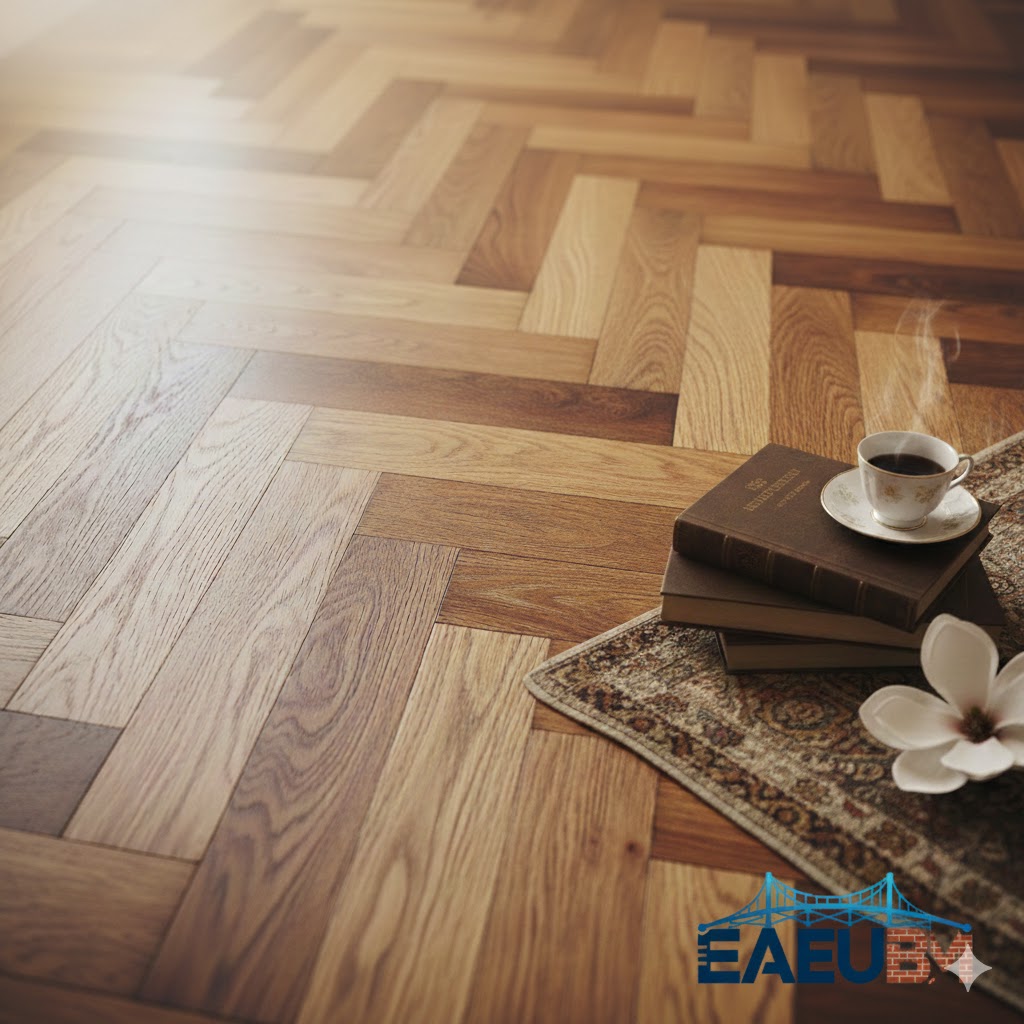
Parquet and Climate: An Overview of Flooring Selection for Various Climatic Zones
Wood and wood-effect floor coverings (parquet and laminate) are among the most popular choices in interior design, offering warmth, beauty, and a natural feel to any space. However, the durability and stability of these floors are highly dependent on climatic conditions, particularly environmental temperature and humidity levels. The correct selection of flooring type, based on the local climate, is crucial for ensuring its longevity and aesthetic appeal.
Main Types of Parquet and Laminate Flooring
Before analyzing suitability for different climates, it is essential to understand the primary categories of wood and wood-effect flooring:
- Solid Hardwood Parquet: Made from solid, single pieces of natural wood and is considered the most luxurious option. It is extremely sensitive to changes in temperature and humidity due to the wood’s natural tendency to absorb and release moisture.
- Engineered Wood Parquet: Constructed from multiple layers of wood and composite materials, with a top layer of natural wood veneer. Its multi-layered structure offers greater dimensional stability against humidity changes compared to solid hardwood.
- Laminate Flooring: Composed of compressed layers of HDF (High-Density Fibreboard) topped with a wood-look decorative layer. It is not natural wood but is sensitive to water due to the HDF core (new waterproof models are an exception).
- Vinyl/PVC Flooring (Luxury Vinyl Plank – LVP): A synthetic flooring option that is 100% waterproof due to its plastic composition, making it an increasingly common alternative to wood in wet environments.
1. Humid and Tropical Climates (e.g., Coastal or Tropical Areas)
The biggest threat to wood-based floors in these climates is high environmental humidity and the potential for direct water contact, which causes swelling, warping, and decay.
| Suitable Flooring Type | Characteristics and Rationale for Selection |
| Vinyl Flooring (LVP) | The Optimal Choice. It is 100% waterproof, boasts high dimensional stability, and remains unaffected by atmospheric humidity. |
| Waterproof Laminate | Newer laminate models reinforced with PVC or SPC technology and featuring wax-protected seams offer good resistance to everyday water spills. |
| Engineered Wood with Protective Finish | Provides better stability than solid wood and is acceptable for moderate humidity, but requires robust protective finishes (e.g., strong lacquer or oil) in very high-humidity environments. |
| Thermo-Treated Wood Parquet | Natural wood that has undergone a thermal process (thermo-treatment) to significantly increase its moisture resistance, ensuring greater durability in humid settings. |
2. Dry and Cold Climates (e.g., Mountainous or Continental Areas)
The main challenge in these regions is the extreme dryness of the air in winter (especially when heating systems are on) and temperature fluctuations. Excessive dryness leads to moisture loss from the wood, resulting in shrinkage, cracking, and gaps forming between planks.
| Suitable Flooring Type | Characteristics and Rationale for Selection |
| Laminate (with a Dense HDF Core) | Due to its compressed and synthetic structure, it is less reactive to dryness than natural wood. Higher thickness (8 or 10 mm) and proper underlayment help retain floor temperature. |
| Natural/Engineered Parquet | They are good natural thermal insulators, providing a warmer feel. However, they require environmental humidification (using a humidifier) to prevent cracking. |
| Dark Colors | In cold climates, choosing flooring with darker colors is recommended as they absorb heat better (especially in sunlit areas) and create a warmer perception. |
3. Hot and Dry or Hot and Humid Climates (e.g., Desert or Southern Regions)
In hot areas, the key concern is high heat and direct solar radiation (UV exposure), and in southern regions, a combination of heat and high humidity.
| Suitable Flooring Type | Characteristics and Rationale for Selection |
| UV-Resistant Laminate | High-quality laminates with a high Abrasion Class (e.g., AC4 and AC5) offer good resistance to UV radiation and are less prone to fading. |
| Light Colors | In hot climates, lighter colors tend to absorb less heat, helping to keep the space relatively cooler. |
| Vinyl Flooring (LVP) | In Southern regions where humidity is high, vinyl provides the best dimensional stability and moisture resistance. |
Key Notes on Installation and Maintenance (Regardless of Climate)
- Proper Underlayment: Using a standard insulating foam underlay beneath laminate, especially in cold areas, is essential for thermal and acoustic insulation.
- Expansion Gap: When installing both solid and engineered wood, a suitable gap (approx. 8–10 mm) must be left between the flooring and the walls to allow for natural expansion and contraction.
- Internal Humidity Control: In cold and dry regions, using a humidifier to maintain internal relative humidity between 45% and 60% is vital to prevent damage to wooden floors.
- Protective Finish: Applying polyurethane lacquers or specialized wood oils to solid parquet increases its resistance to moisture and wear.
Conclusion:
In summary, for humid or water-exposed environments, vinyl and waterproof laminate floors offer the best performance. In dry and cold environments, high-quality laminate or engineered wood is recommended, provided internal humidity is controlled. Ultimately, the natural texture and look of wood will always offer superior aesthetics, but selecting the right type and adhering to maintenance rules is the key to its durability in any climate.
To view related products, please visit the Eurasia store website.
For more information regarding the regulations, costs related to exports, imports, and supply of goods, as well as to receive consultation, please contact us at +37495447044